United In God's Work
-
 Donor Login
| -
 0
0 | 
| 
Donor Login
0
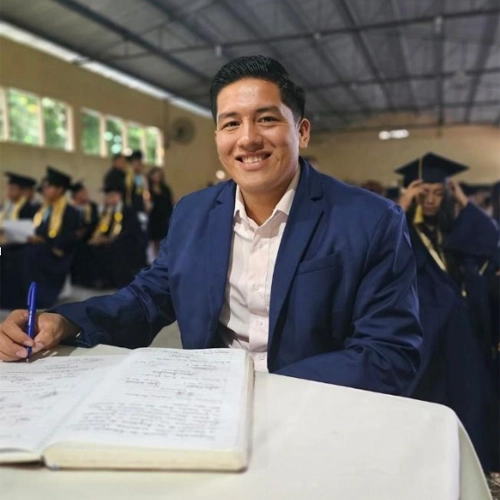
Gerson's childhood was shaped by poverty, family separation, and loss. When he was just three years old, his father abandoned the family to immigrate to the United States, leaving his mother to raise Gerson and his older brother, Luis, on her own. Determined to provide for her children, she sold bread and washed clothes for neighbors, but despite her hard work, earning enough to support the family proved nearly impossible.
When Gerson was four, the family moved from San Francisco de Yojoa, Cortés, to Piraera, in the Department of Lempira, where his maternal grandparents could help care for the boys. Several years later, hoping to find better opportunities, his mother migrated to El Salvador for work, leaving Gerson and his brother in the care of their grandparents and extended family. Although surrounded by relatives, life remained difficult. The small house was overcrowded, and each night Gerson and his brother quietly cried themselves to sleep beneath the same blanket, longing to be reunited with their mother.
His mother eventually returned to Honduras and found work as a housekeeper in San Pedro Sula. Gerson's older brother moved in with her to pursue his dream of becoming a professional soccer player, while Gerson remained behind. At first, his mother visited every two weeks, but over time those visits became less frequent. Still just a young boy, Gerson often found himself alone, struggling with hunger and losing the motivation to attend school as he watched classmates who had far more than he did.
At thirteen, Gerson believed he would finally have the chance to rebuild his family when his mother became pregnant with his younger sister. Instead, tragedy struck. His mother died from complications during childbirth, and his newborn sister passed away from pneumonia only days later. With nowhere else to turn, Gerson reached out to his father for help, but his father refused, telling him that at thirteen years old he was old enough to earn his own living.




More than 4.7 Billion Meals

96,381 Safe & Secure Homes

105,415 Tractor-Trailers of Essential Aid
