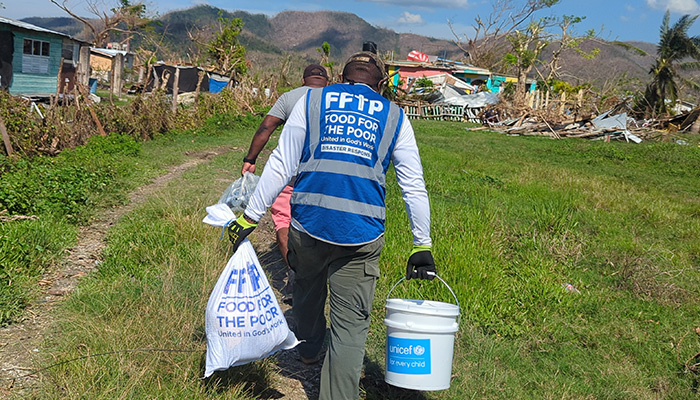
As Hurricane Melissa tore through Jamaica last fall, families faced devastating loss. Their homes were damaged, livelihoods disrupted, and communities were left struggling to recover. In this blog, we’ll look back at the beauty of this idyllic island and then you’ll learn about Food For The Poor’s immediate response in the aftermath of Hurricane Melissa with emergency relief in Jamaica.
You’ll also see how the work to bring Jamaica back to its former beauty continues today through long-term rebuilding and repair efforts across the island. You’ll also find out how you can still help families rebuild safer homes, restore community stability, and help with recovery as Food For The Poor continues its phased response to one of Jamaica’s most destructive storms on record.
Jamaica’s Natural Beauty Marred by Hurricane Melissa
Jamaica is the kind of place that feels like a postcard came to life, bright blue water brushing the shoreline, green mountains rising in the distance, and pockets of wonder tucked around nearly every bend.
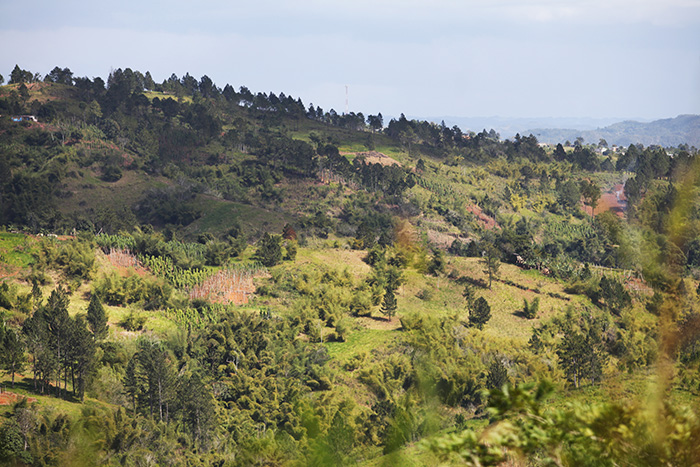
In the Blue Mountains, morning light can roll in soft and golden over layered ridgelines, turning the peaks into silhouettes against the sky. Along the north coast, Dunn’s River Falls is a rush of clear water tumbling over smooth, terraced limestone, spilling out near the sea, blending rainforest with beach.
Then there’s the quiet magic of Luminous Lagoon near Falmouth, where the water, when it’s stirred, makes the dark feel alive.
Melissa Makes Landfall: Jamaica’s Fight to Survive Begins
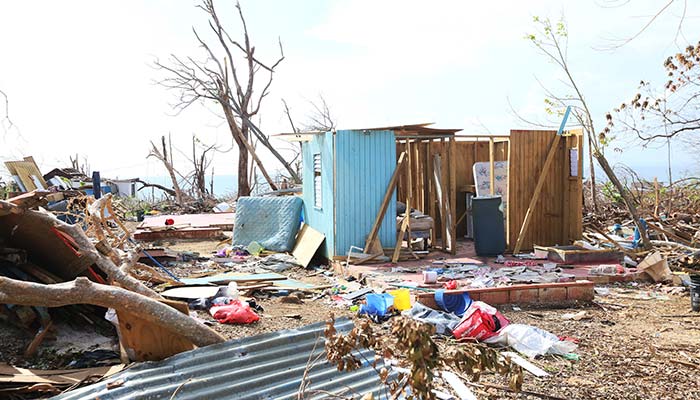
Then, in October of 2025, Hurricane Melissa made landfall. Not only did the storm devastate the island, but it also affected the lives of thousands: about 30,000 displaced households (AP News), 156,000 dwellings damaged and 24,000 houses totally lost (CNW Network). Homes became hazards and the sense of security, a platform for emotional well-being, instantly disappeared for these families.
Help Was Activated Immediately: Jamaica’s Hurricane Melissa Relief Began Without Delay
After Hurricane Melissa tore across Jamaica, the first priority was simple: get help moving again and get it there fast. Food For The Poor responded with a steady pipeline of relief, moving 229 ocean containers and completing 21 air shipments to ensure essential supplies reached communities without delay.
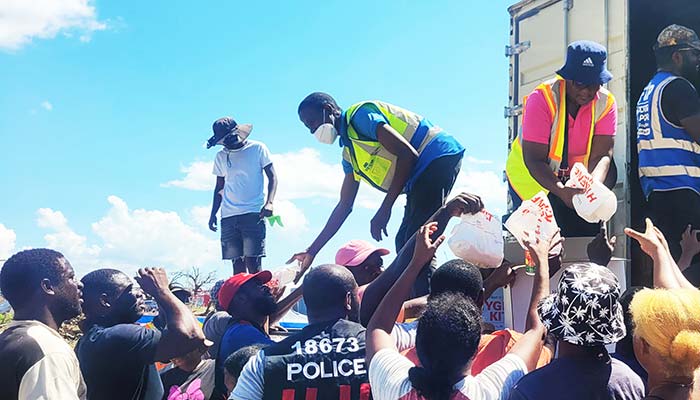
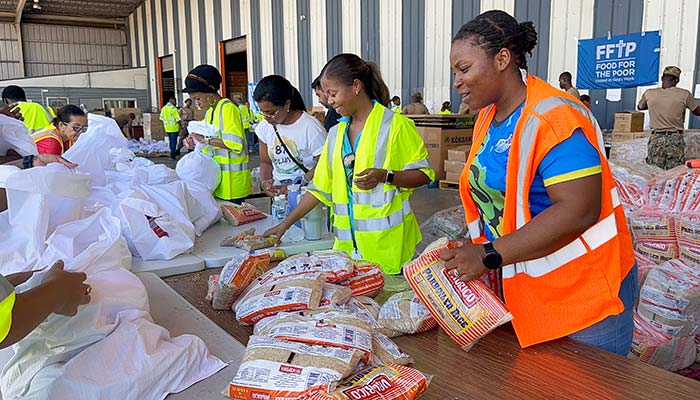
As trucks rolled out and boxes were carried hand-to-hand, the scale of care became tangible: 125,458 relief kits distributed, including 85,357 food kits and 40,101 hygiene kits, practical support that helped over 85,000 families make it through the hardest days.
In total, $10 million-plus in aid was delivered, but the impact wasn’t measured only in dollars. It showed up in the faces of neighbors and church partners working side by side, and in the generosity of 3,000+ volunteers who stepped forward, giving 4,190+ volunteer hours and packing thousands of packages so families could receive what they needed with dignity and care.
Food For The Poor Launches the Recovery Phase: Hope Rises From the Ruins
As the immediate crisis eased, the work shifted from survival to recovery. Teams helped families reclaim a sense of safety by repairing what the storm had ripped away: 234 roofs were restored, each one a household steadied.
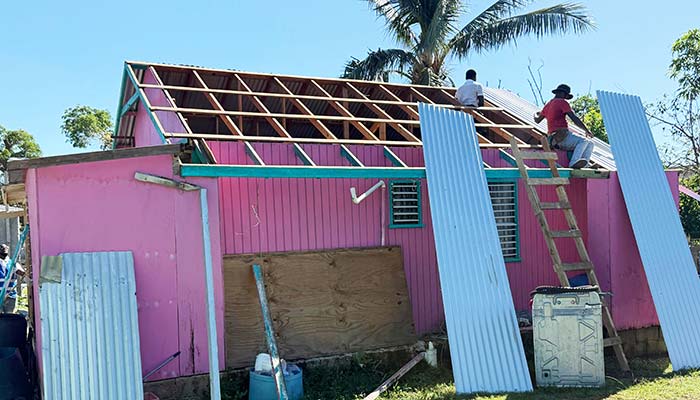
In coastal communities where livelihoods depend on the sea, the 22 fishing boats repaired meant parents could return to work and provide for their families again. In farming communities, the recovery included a quiet but powerful milestone: all beekeepers were back in production, a sign that livelihoods were gaining strength.
United Response: Partnerships Deliver Hope
After Hurricane Melissa, Food For The Poor collaborated with multiple partners to move relief faster and farther across Jamaica. The organization coordinated with national relief structures to serve as a logistics hub for inbound shipments, staging and distribution. It also helped facilitate an international partnership that brought 14 containers of emergency supplies from Puerto Rico. In addition, Food For The Poor worked alongside public and private supporters to mobilize funding and awareness, including a collaboration with the Sean Paul Foundation. Through its Jamaica operations and wider Food For The Poor network, the organization also activated coordinated response systems to help route aid where it was needed most.
Food For The Poor was officially recognized as a central logistics hub for Jamaica’s relief network after Hurricane Melissa. According to The Gleaner, this role included inbound shipment handling, customs clearance, staging and nationwide dispatch as part of the wider relief structure.
Jamaica Rebuilding Campaign: Rising From the Ruins
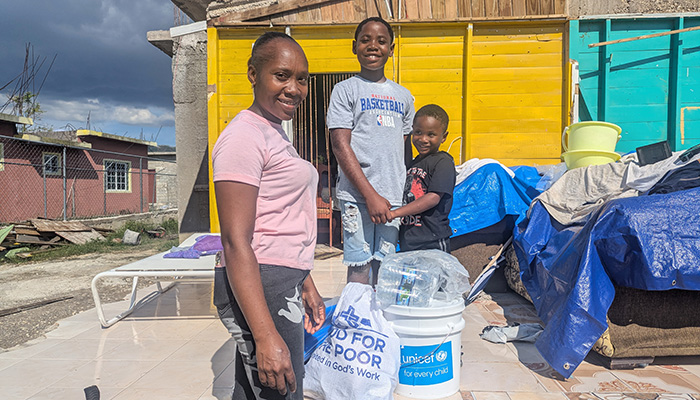
And because a storm’s damage doesn’t end when the winds and rains stop, Food For The Poor launched the Jamaica Rebuild Campaign, a multi-phase initiative designed to move families from temporary fixes to lasting stability. With $1 million in seed funding to start, the campaign is positioned to scale new home construction and other needed repairs and rebuilds across impacted communities, building forward with intention, one family at a time.
“Food For The Poor has become the connective tissue of Jamaica’s disaster response,” said Ed Raine, Food For The Poor’s president and CEO. “Our mission is to deliver hope under pressure.”
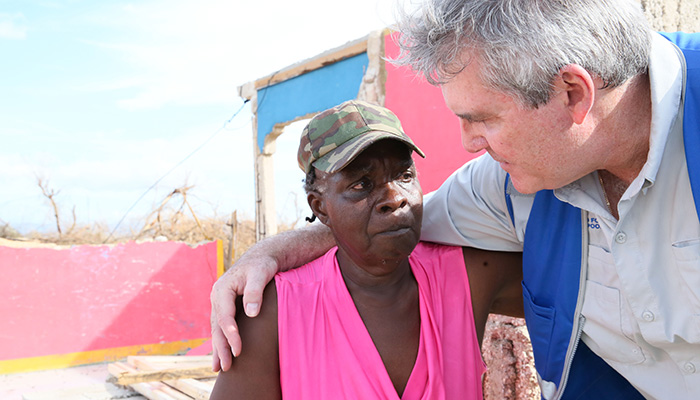
Be Part of Jamaica’s Recovery: Your Help Starts Here
Families in Jamaica still need help recovering and rebuilding after Hurricane Melissa. Your contribution can make a difference. Donate today.
Why Disaster Relief, Recovery and Sustainability Matter for Food For The Poor
FFTP’s mission is to help those in greatest need, linking donors, churches, boots-on-the-ground partners, and communities to deliver both immediate relief and long-term, holistic solutions that uphold dignity and help families move toward a life of fullness.
Learn more about Food For The Poor here: foodforthepoor.org.