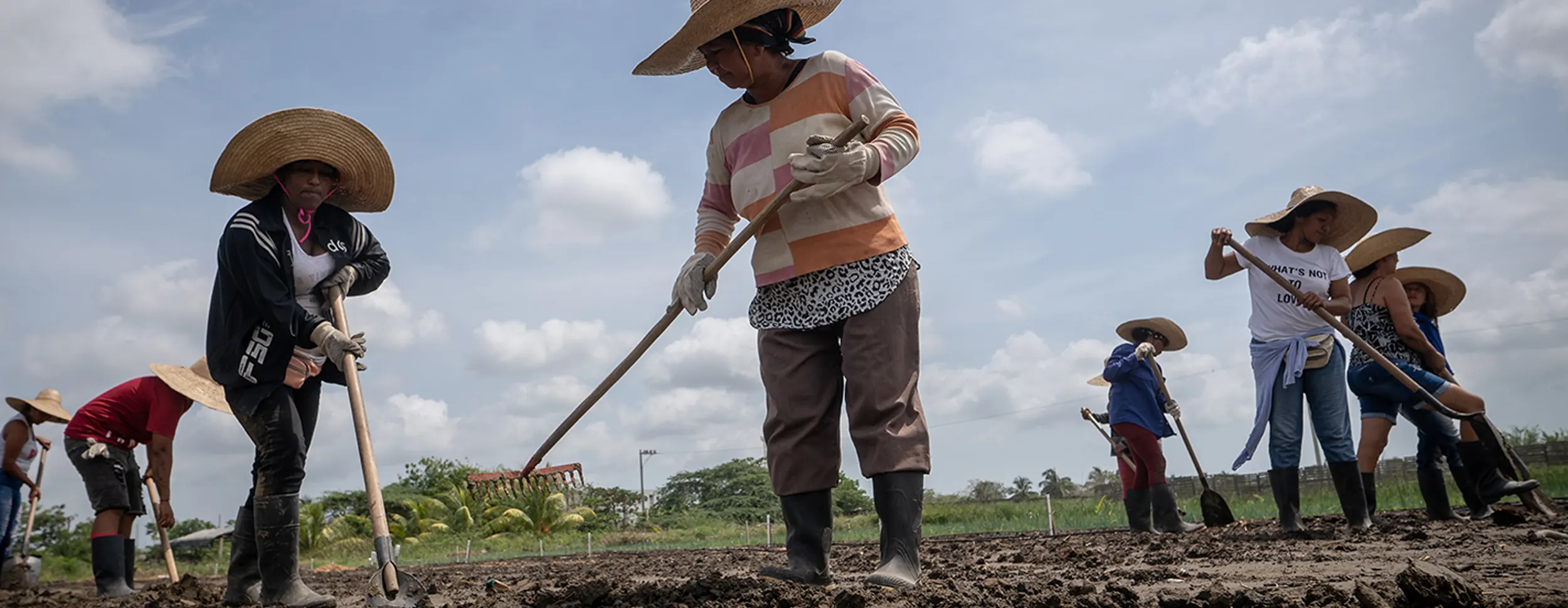
How traditional knowledge and sustainable agriculture can strengthen food security, livelihoods and the land
For generations, Indigenous and rural farming communities across Latin America have developed agricultural knowledge rooted in the land — knowledge about crops, seasons, biodiversity and the relationship between agriculture and community life.
Today, researchers are examining how this knowledge can contribute to stronger, more sustainable food systems.
A study published in the International Journal of Agricultural Sustainability examined traditional agriculture among Indigenous and campesino communities in six Latin American countries: Chile, Peru, Ecuador, Colombia, Guatemala and Mexico. Researchers found that traditional agricultural knowledge, techniques and practices can contribute to food sovereignty while helping preserve cultural and ecological heritage. The researchers also emphasized the importance of protecting this knowledge from pressures such as cultural loss and poorly adapted development interventions.
Research published in BMC Nutrition offers another perspective. Studying agroecological and Indigenous communities in Ecuador, Deaconu and colleagues examined the relationship between traditional foods, agricultural production, diets and environmental health. Their work highlights the potential value of traditional foods and agroecological approaches in efforts to improve human and environmental health.
These ideas matter in the fight against hunger because agriculture is about more than producing a crop. For farming families, it can also mean preserving knowledge, earning an income, protecting natural resources and creating opportunities for the next generation.
Across Latin America, communities where Food For The Poor works illustrate different dimensions of that relationship — from Lenca families in Honduras preserving traditions connected to agriculture and the land, to coffee and honey farmers strengthening a cooperative, to cacao producers in Peru combining sustainable farming practices with technical assistance and access to international markets.
When the Land Is Part of Culture
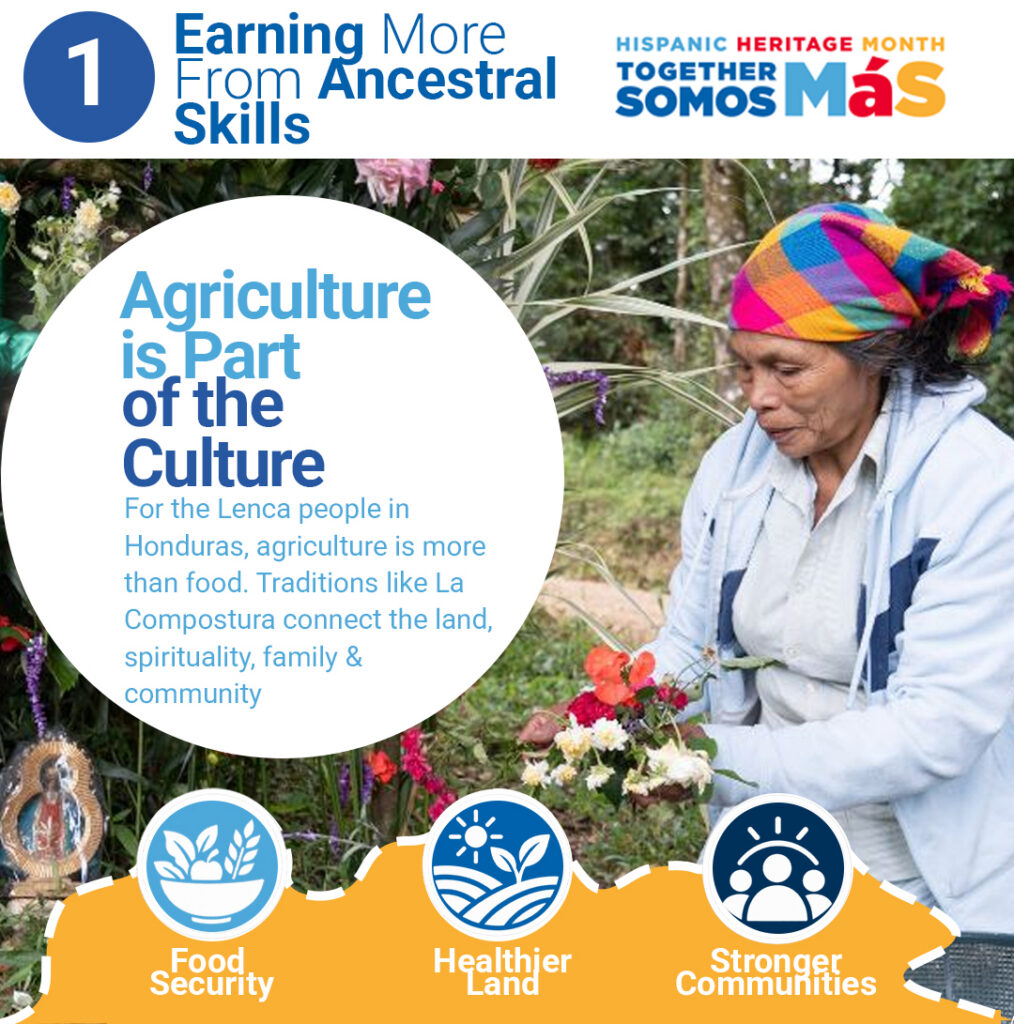
In the mountainous communities of Intibucá, Honduras, agriculture is an essential part of Lenca economic and family life.
Corn, beans, potatoes, mushrooms and vegetables are part of daily life. But the relationship between people and the land extends beyond what can be harvested. Territory, agricultural cycles, natural phenomena and family well-being are connected to a spiritual dimension expressed through knowledge and practices passed down through generations.
One expression of this relationship is La Compostura, a Lenca ceremony combining Indigenous spirituality with Catholic symbols and practices.
The ceremony can be performed before planting and throughout the agricultural cycle to seek good harvests and protection for crops and animals. It is also practiced during illness, hardship and family or community celebrations. Altars incorporate fresh vegetation, crosses and sacred images, while chicha, a traditional corn-based beverage, is offered as a tribute.
For Maria González, a spiritual leader in the community, agriculture, spirituality and well-being are deeply connected.
“We perform La Compostura to ask for a good harvest. Everything we possess comes from the land.”
This knowledge isn’t written in a farming manual. Much of it is transmitted orally.
Parents, grandparents and other elders teach younger generations practices involving spirituality, agriculture and traditional medicine. Don Aniceto, one of the community elders, for example, describes chicha as both an offering to Mother Earth and a traditional remedy for fevers and illnesses.
That intergenerational transmission helps make La Compostura a living tradition rather than simply a memory of the past.
During the ceremony documented in San Buenaventura, children participated alongside their families and elders, learning practices that may eventually be passed to their own children.
It is a local example of a broader idea identified by Parraguez-Vergara and colleagues: protecting agricultural knowledge can also mean protecting cultural and ecological heritage.
Strengthening Agricultural Livelihoods
Preserving knowledge is one part of building resilient agricultural communities. Farmers also need resources, skills, organizations and opportunities to earn sustainable incomes.
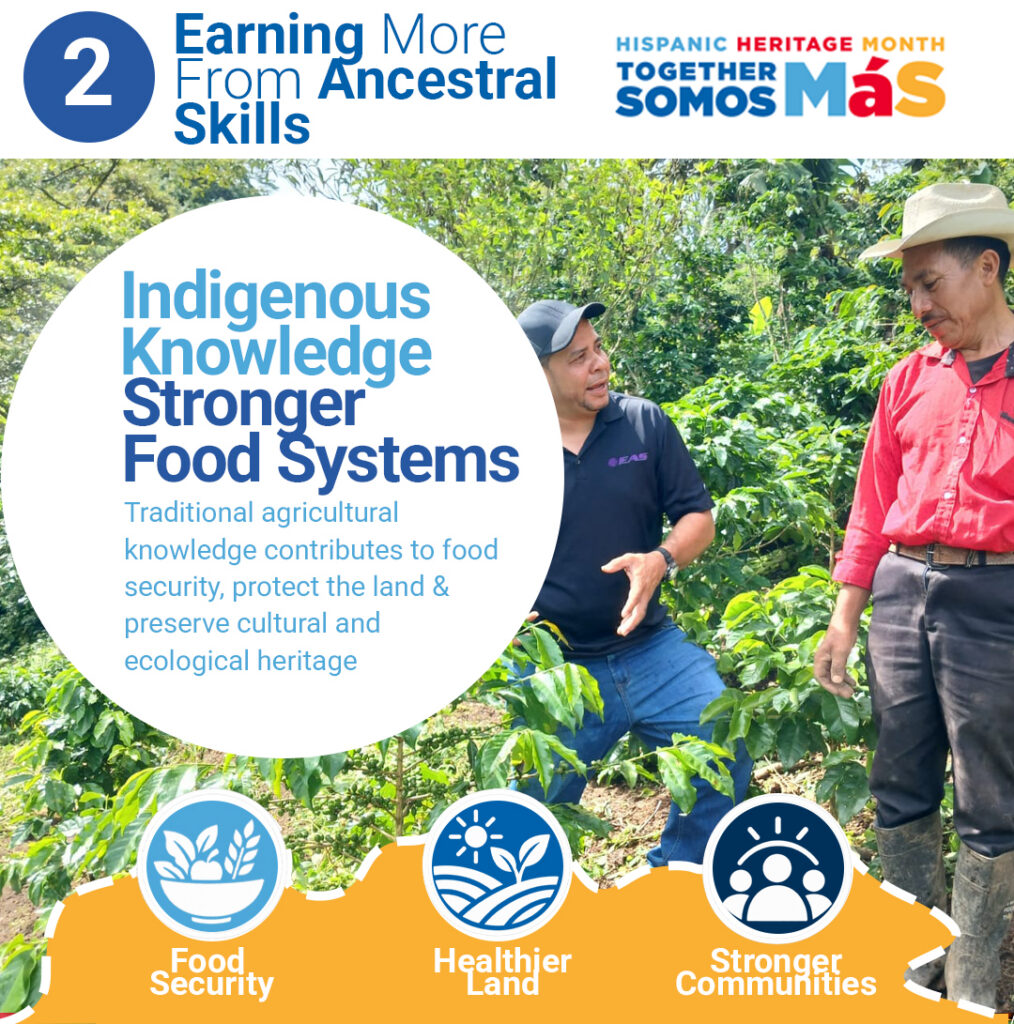
The COMBRIFOL Honey and Coffee Projects in the Marcala area of Honduras demonstrate another side of that equation.
Working through in-country partner CEPUDO, the projects supported 30 beekeepers and 112 coffee growers. The goal was to improve farmers’ quality of life by increasing production while strengthening the COMBRIFOL cooperative. Farmers received agricultural inputs and machinery as well as training and technical assistance.
The post-evaluation found improvements in both production and revenue.
For coffee, median gross revenue from production sales increased from $670.46 at baseline to $2,641.20 at endline. Although it subsequently decreased to $2,255.18 in the post-evaluation, it remained substantially above the baseline. Honey revenue also increased over the course of the evaluations.
The project also provides an important lesson about sustainable agricultural development: not every activity has to serve the same purpose.
Coffee met its production targets and generated a positive financial return. Honey generated a lower return on investment, leading the evaluation to emphasize beekeeping as a supplementary source of income. But bees may offer another benefit: supporting coffee crops and increasing local biodiversity.
That broader view of agriculture — considering income, crops and ecosystems together — echoes themes found in research on agroecological food systems.
Cacao, Agroforestry and Opportunity in Peru
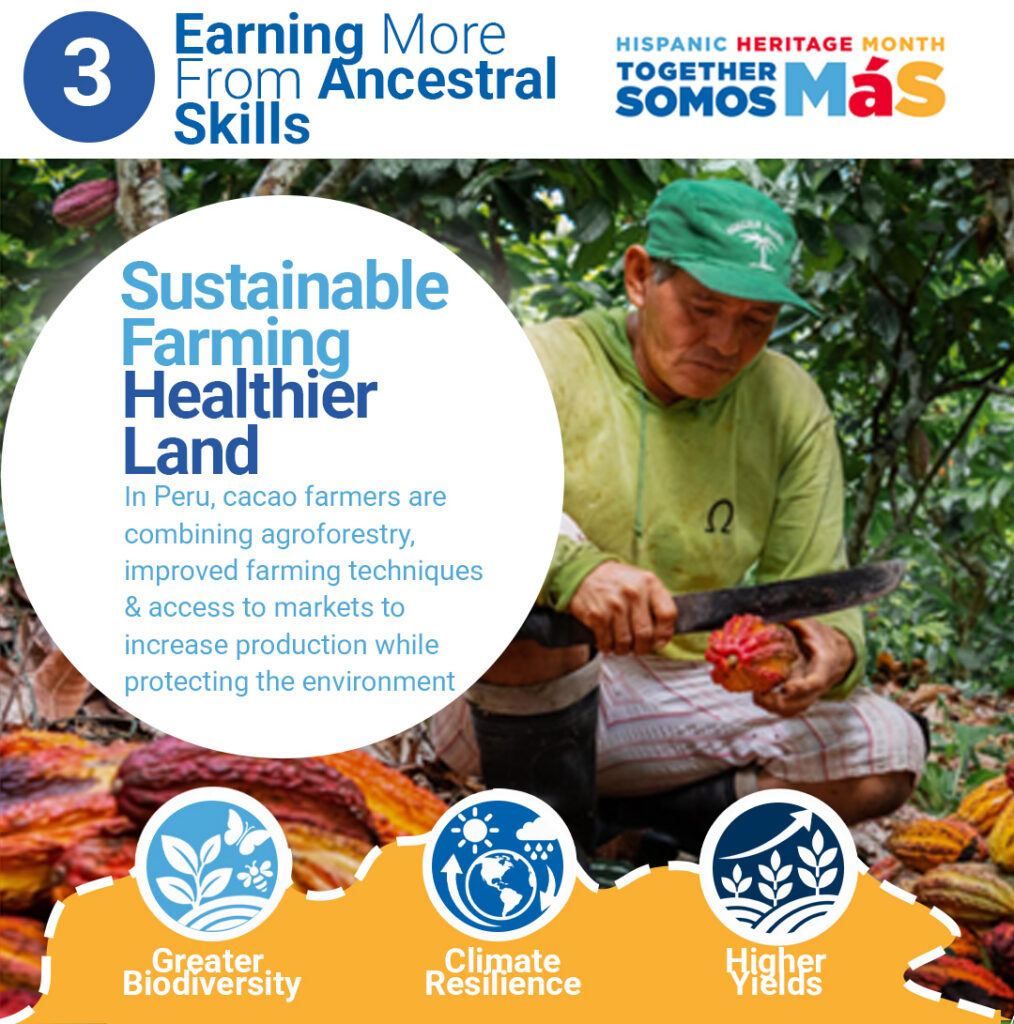
In Neshuya, Peru, another group of farmers shows how agricultural livelihoods can be strengthened by combining farming experience with new technologies, training, cooperative organization and access to markets.
A two-year Food For The Poor project sought to improve the living conditions of 500 cacao farmers by introducing technological innovations, strengthening producer organizations, developing more inclusive market systems and improving access to financing.
By the end of the project, more than 500 organic cacao producers had improved production, family income, marketing and access to economic resources, according to the project’s final report.
The farmers are members of the CAC Colpa de Loros cooperative.
The report states that 503 producers cultivate and sell dry cacao beans under Organic, Fair Trade, Fair For Life and Rainforest Alliance standards. Through their cooperative, farmers sell cacao to the French company KAOKA under a long-term contract guaranteeing the purchase of cacao production for 10 years.
That access to a buyer is important. But so is what happens on the farm.
Farming With the Environment in Mind
Over the project’s two years, cacao farmers learned and implemented agricultural practices designed to improve productivity and quality.
These included plant nutrition and timely pruning, integrated pest management using microorganisms, and crop management through agroforestry systems designed to promote biodiversity and sustainability.
According to the final report, these technological innovations contributed to a 50% increase in productivity and improvements in bean quality that met international standards for fine and aromatic cacao.
Farmers received significant hands-on support. Six field technicians worked across the project’s eight geographic sectors and provided 893 personalized technical assistance services, including guidance on nutrition, pruning, integrated pest management and other practices.
Demonstration farms created another way for knowledge to spread. Producers could learn techniques, interact with other farmers and exchange lessons with one another.
Farmers also learned about seed selection, cultivation, fermentation and drying, international quality standards and sustainable practices intended to protect the environment and promote biodiversity.
Adapting to a Changing Environment
The need for resilient agriculture becomes particularly clear when farmers encounter environmental pressures.
In Peru, drought and extreme temperatures linked in the project report to climate change contributed to increases in pests and crop diseases. Farmers also faced limited financial resources for purchasing necessary inputs.
The project’s technical team responded by helping farmers combat disease, produce organic compost and plant forest seedlings for environmental conservation.
Organic cacao plants were also grown alongside forest species, incorporating trees into the agricultural landscape.
The approach illustrates an important principle found in the academic research: food production and environmental health do not necessarily need to be competing goals.
Deaconu and colleagues’ research in Ecuador examines how traditional foods and agroecological production can connect human nutrition with environmental health. Parraguez-Vergara and colleagues similarly frame traditional agricultural knowledge alongside the challenges of sustainable food production and ecosystem conservation.
From the Farm to the Family
For families experiencing poverty and food insecurity, a stronger harvest can have effects beyond the field.
In Peru, the project report observed that rising family income was associated with greater household consumption and investment, particularly in organic fertilizers. It also reported improvements in farmers’ quality of life as greater production and better market prices allowed producers to invest more in their plots and gain greater access to health and education services.
These socioeconomic findings were based on project observations rather than recent quantitative studies, so they should not be interpreted as measured causal effects.
One farmer, Francisco, offers a more personal example.
He owns five hectares, with 2.5 dedicated to aromatic cacao and the remainder used to grow guava, pacay and other plants. According to the report, increased income from cacao has allowed him to pay for household necessities while reinvesting some of his earnings in his fields.
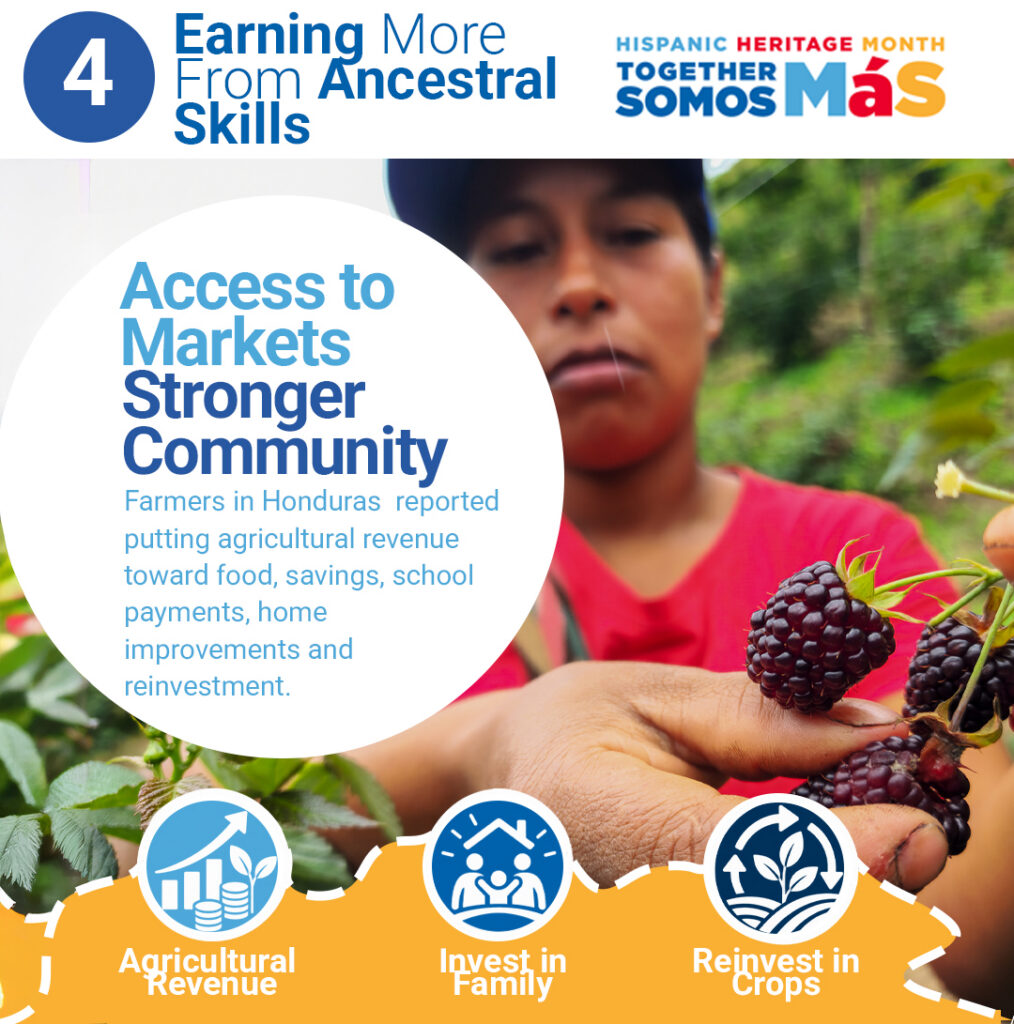
COMBRIFOL farmers in Honduras also reported putting agricultural revenue toward food, savings, school payments, home improvements and reinvestment.
These examples help show why fighting hunger is not simply a matter of producing more food. Agricultural livelihoods can affect whether families have resources for food, education, housing, health and the next planting season.
Knowledge Worth Passing On
Across these stories, one idea continually returns: knowledge matters.
Sometimes that knowledge has been carried for generations.
Sometimes it comes through farmer-to-farmer learning, technical assistance or new agricultural research.
And often, resilient agriculture can involve both.
Parraguez-Vergara and colleagues conclude from their Latin American case studies that traditional agricultural knowledge and practices can contribute to food sovereignty, but they also emphasize the importance of supporting local actors and protecting cultural and ecological heritage.
In the Lenca community of San Buenaventura, that idea becomes deeply personal.
Ángel González Domínguez, 27, is among the younger generation learning the traditions practiced by his elders.
“Although we are young and still learning, we trust completely in this work,” he said. “We keep teaching these steps to our own children so that our community’s way of life does not disappear.”
His words point toward a broader understanding of what it means to fight hunger through agriculture.
It means recognizing that communities already possess valuable knowledge about their land. It means creating opportunities for farmers to add new skills and technologies without assuming that progress requires leaving existing knowledge behind. And it means strengthening cooperatives, protecting natural resources and creating connections to markets that can help farming families earn sustainable livelihoods.
When agricultural knowledge is preserved, strengthened and passed forward — and when farmers have the resources and opportunities to put that knowledge to work — the land can nourish more than today’s harvest. It can help build a more resilient future for families and communities.