
The world produces enough food to nourish its population, yet millions of people still go hungry. Research reveals why food abundance does not guarantee food security—and how reducing food waste, addressing poverty, and strengthening food systems could help end hunger.
Every day, farmers around the world produce food for billions of people. Yet millions of families struggle to afford nutritious meals, and countless children face the consequences of inadequate nutrition.
This raises an important question: If the world produces enough food, why are people still hungry?
The answer goes beyond how much food we grow. Hunger is closely connected to poverty, food prices, unequal access, conflict, and the enormous amount of food lost or wasted between farms and dinner tables.
Research suggests that reducing food loss and waste could significantly improve global food security. However, ending hunger requires more than producing additional food or preventing it from being discarded. It also means ensuring that vulnerable families can access and afford the food they need.
The Global Food Supply: Is There Enough Food for Everyone?
The world produces enough food, in aggregate, to meet the population’s dietary energy needs. But global abundance does not mean that food is equally available, affordable, or nutritious everywhere.
Some countries produce agricultural surpluses, while others rely heavily on imported food. Within individual countries, food availability can vary significantly between cities, rural communities, and regions affected by conflict or natural disasters.
Even when markets are well stocked, families may not have enough money to purchase the food they need.
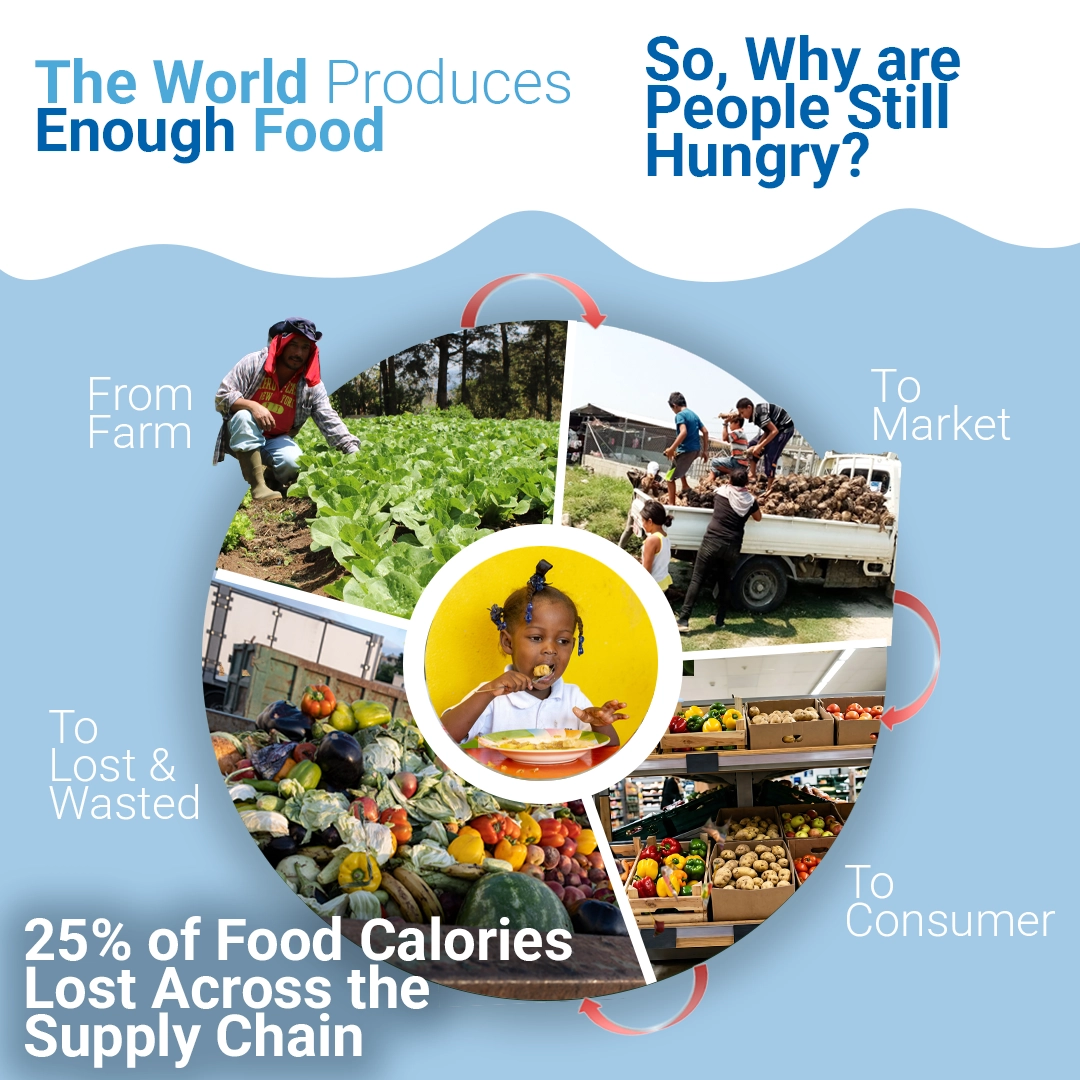
The global food supply chain also plays a critical role. Food must move through harvesting, storage, processing, transportation, and distribution before reaching consumers. At every stage, food can be lost because of inadequate infrastructure, poor storage conditions, spoilage, or logistical disruptions.
A 2012 study published in Science of the Total Environment estimated that approximately one-quarter of the global food supply, measured in calories, was lost along the food supply chain.
The researchers also found that producing this lost food consumed substantial agricultural resources, including freshwater, cropland, and fertilizers.
In other words, the challenge is not simply growing more food. It is also making better use of the food already produced.
Poverty vs. Food Shortages: Why Hunger Is Often About Affordability
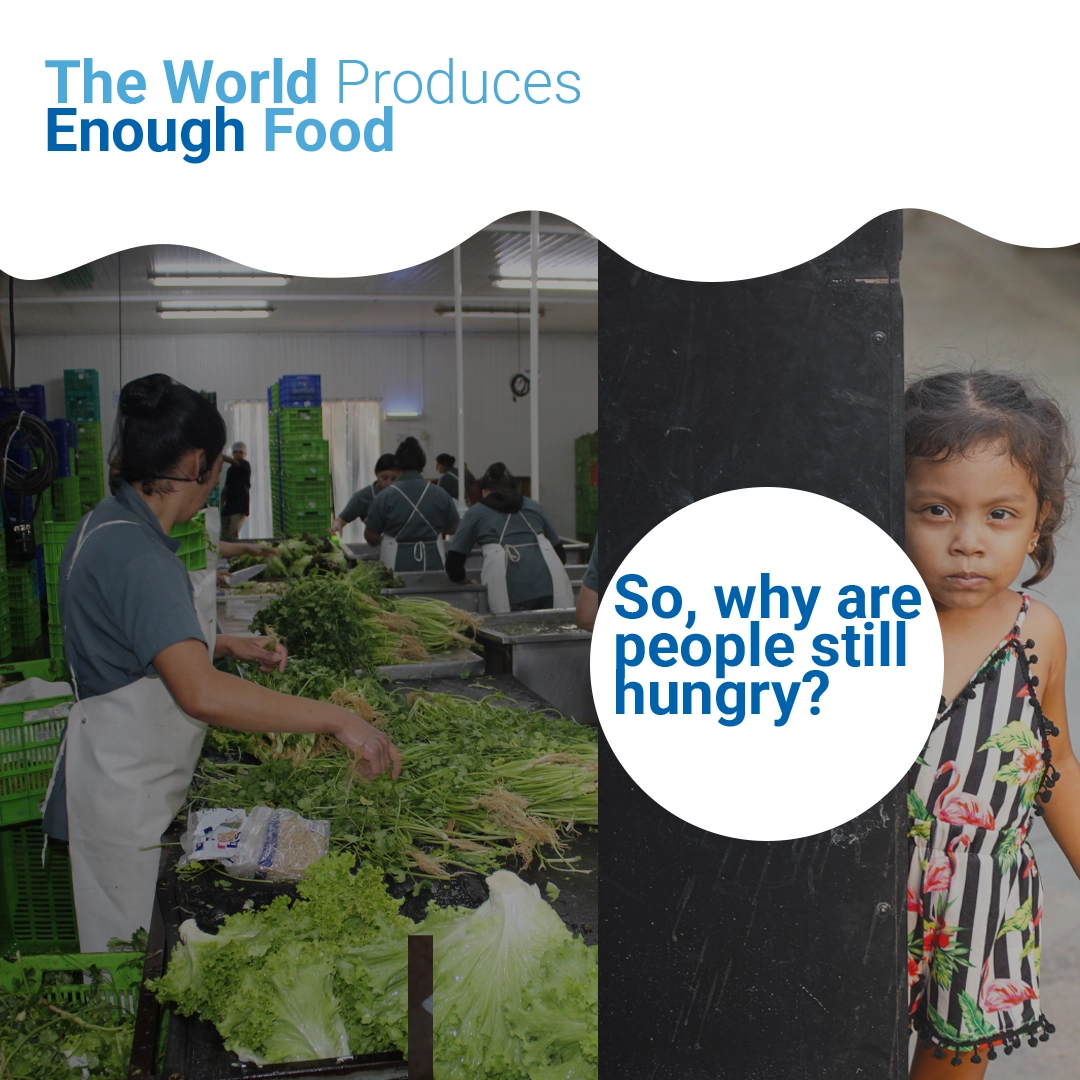
One of the biggest misconceptions about global hunger is that people go hungry primarily because there is not enough food.
In reality, poverty is one of the most significant barriers to food security.
For families living on extremely limited incomes, even basic staples such as rice, beans, vegetables, and cooking oil can become unaffordable.
When food prices rise, households face difficult choices. Parents may skip meals so their children can eat. Families may reduce portion sizes, eat less frequently, or purchase cheaper foods that provide insufficient nutritional value.
These coping strategies can have lasting consequences, particularly for children, whose growth, development, and ability to learn depend on adequate nutrition.
According to The State of Food Security and Nutrition in the World 2025, an estimated 673 million people experienced hunger in 2024, while approximately 2.6 billion people could not afford a healthy diet.
These figures highlight an important distinction: Food can exist in sufficient quantities while remaining financially out of reach for millions of people.
Poverty and hunger can also reinforce each other. Inadequate nutrition can affect physical health, productivity, and educational opportunities, making it harder for families to improve their economic circumstances.
Breaking this cycle requires both immediate food assistance and longer-term investments in livelihoods, agricultural development, and economic opportunity.
Food Waste and Distribution: Where Does All the Food Go?
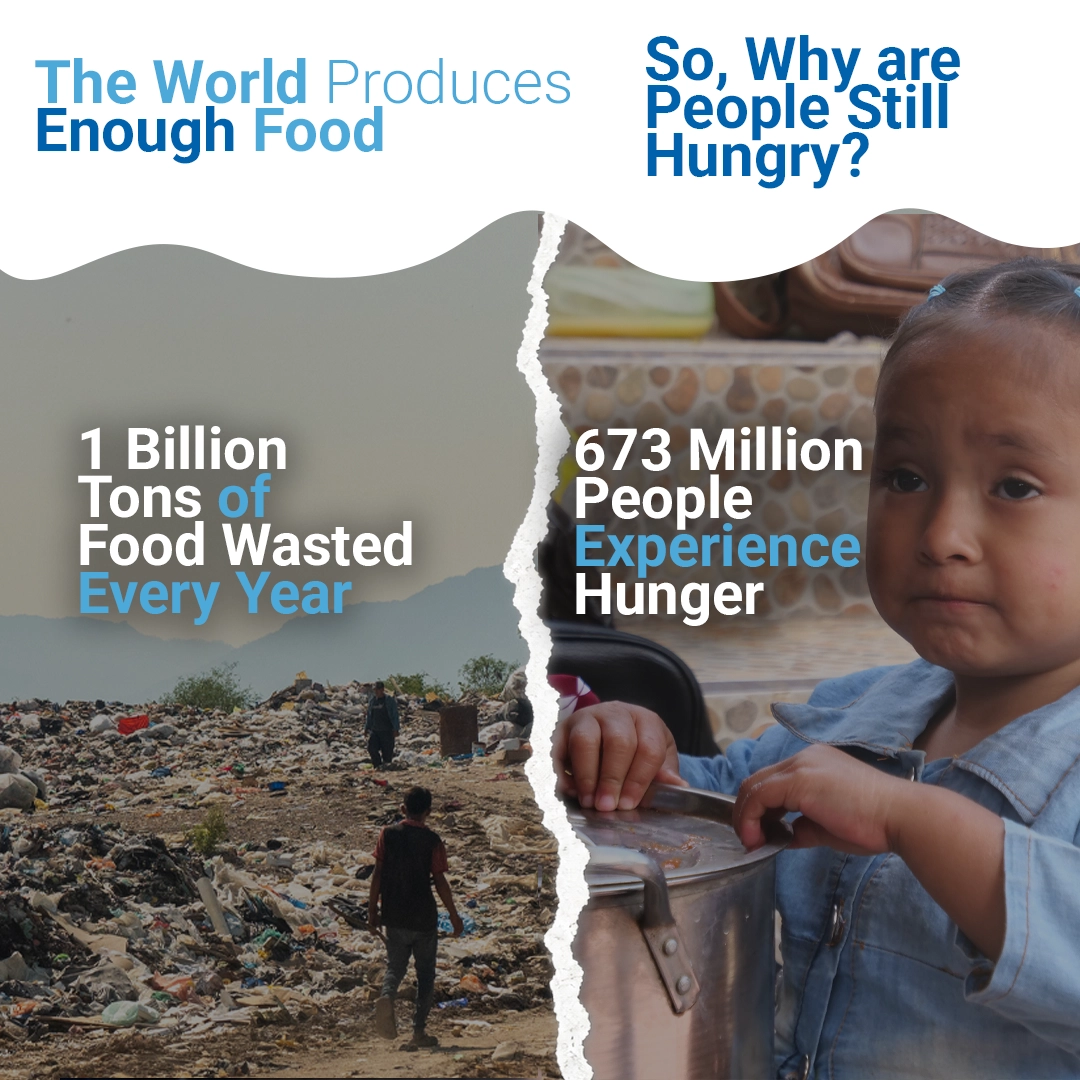
While millions of people struggle to find enough to eat, enormous quantities of food are lost or wasted every year.
The United Nations Environment Programme’s Food Waste Index Report 2024 estimated that 1.05 billion tonnes of food were wasted in 2022 at the household, food-service, and retail levels.
That represented approximately 19% of the food available to consumers.
Food loss and food waste occur at different stages of the supply chain.
Food loss generally occurs before food reaches retail markets. Crops may spoil after harvesting, perish during transportation, or deteriorate because farmers lack adequate storage or refrigeration.
Food waste occurs at retail and consumer levels. Supermarkets may discard unsold products, restaurants may prepare more food than customers consume, and households may throw away food that could otherwise have been eaten.
These problems are interconnected, but their causes vary across countries and communities.
In areas with limited infrastructure, reducing post-harvest losses may require better roads, storage facilities, agricultural training, and access to markets.
In wealthier consumer markets, reducing waste may involve improved inventory management, smaller portions, and changes in purchasing and consumption habits.
Food waste also represents a loss of valuable natural resources.
The 2012 study by Kummu and colleagues estimated that producing food crops ultimately lost or wasted accounted for approximately 24% of freshwater use, 23% of cropland, and 23% of fertilizer use associated with global food-crop production in the study’s dataset.
When food is wasted, the resources used to produce it are wasted as well.
Could Reducing Food Waste Help End World Hunger?
Research suggests that reducing food loss and waste could make a substantial contribution to fighting hunger.
In their 2012 study, Kummu and colleagues modeled improvements in food supply chains. They estimated that if food losses could be cut in half, the additional food supply could theoretically provide enough dietary energy for approximately one billion more people.
However, this estimate describes potential food availability—not the number of people who would automatically escape hunger.
More recent research offers another perspective.
A 2025 study published by the Organisation for Economic Co-operation and Development (OECD), The Potential Effects of Reducing Food Loss and Waste, examined the possible consequences of meeting global food-loss and waste-reduction targets.
Using an economic modeling framework, the researchers estimated that halving food loss and waste by 2030 could lift approximately 137 million people out of hunger.
The study also projected a reduction of around 4% in agricultural greenhouse gas emissions.
These findings demonstrate the potential benefits of improving food systems.
But they also reveal an important limitation: reducing waste does not automatically ensure that food reaches people experiencing hunger.
Surplus food must still be transported, stored safely, distributed, and made affordable. In some cases, reducing waste can also change agricultural demand and affect farmers’ incomes.
Reducing food waste is an important part of the solution, but it cannot eliminate hunger on its own.
Why Better Food Distribution Matters
A more efficient food supply chain can help connect food producers with the communities that need their products.
For small-scale farmers, access to reliable storage, transportation, and buyers can make the difference between selling a successful harvest and losing part of it before it reaches market.
Better infrastructure can help reduce spoilage, protect agricultural incomes, and increase the availability of food in local communities.
Investments in refrigeration, storage facilities, agricultural training, and transportation networks can also strengthen the resilience of food systems when communities face extreme weather, economic disruptions, or other emergencies.
Yet improving distribution is only one part of the challenge.
Even if food reaches a nearby market, families experiencing extreme poverty may still be unable to purchase it.
This is why lasting food security requires an approach that connects efficient food distribution with stronger household incomes and affordable nutrition.
Building Sustainable Solutions to Global Hunger
Ending hunger requires coordinated action across the entire food system.
Emergency food assistance remains essential for families facing immediate food insecurity. It can provide critical support during crises, disasters, and periods of severe economic hardship.
At the same time, sustainable solutions must address the conditions that make families vulnerable to hunger in the first place.
Supporting local agriculture can help farmers improve production, reduce losses, and strengthen their livelihoods.
Agricultural training, improved storage, access to markets, and dependable purchasing relationships can help farming communities become more economically resilient.
School nutrition programs can also play an important role by providing children with reliable meals. When these programs purchase food from local farmers, they can create opportunities to strengthen local agricultural markets.
At Food For The Poor, efforts to address hunger include food assistance and community-focused initiatives that support nutrition, agriculture, and livelihoods.
These approaches recognize that fighting hunger is not only about providing food today. It is also about helping families and communities build a more secure future.
The Bottom Line: Ending Hunger Is About More Than Producing Food
The persistence of global hunger is one of the greatest contradictions of our modern food system.
The world produces enough food in aggregate to meet humanity’s dietary energy needs, yet millions of people remain hungry because they cannot reliably access or afford nutritious meals.
At the same time, significant amounts of food are lost or wasted across global supply chains.
Academic research demonstrates that reducing these losses could improve food availability, conserve agricultural resources, and help millions of people escape hunger.
But the evidence also makes one thing clear: Food waste reduction alone will not end world hunger.
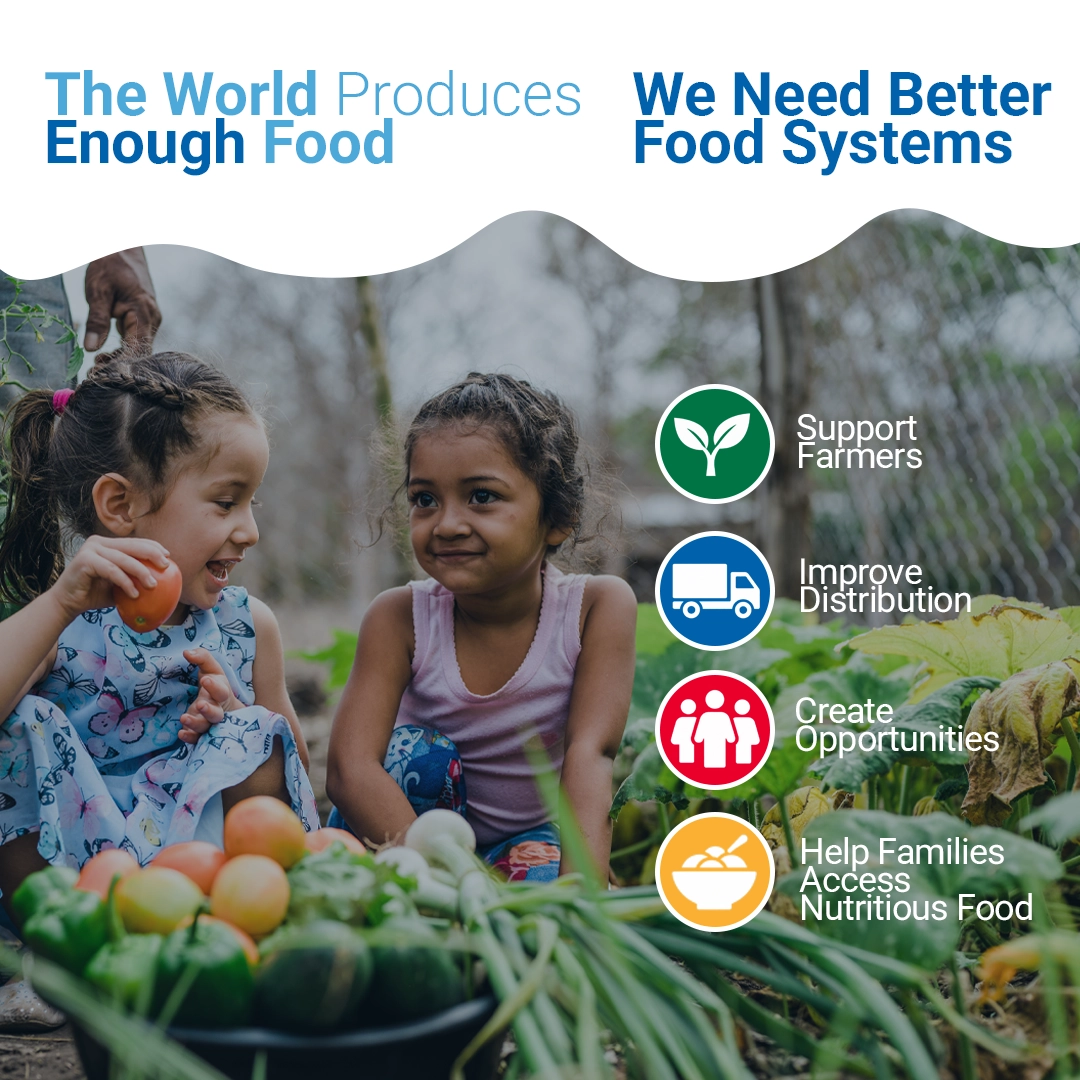
Lasting progress depends on addressing poverty, strengthening local agriculture, improving food distribution, and ensuring that nutritious food is accessible and affordable.
By combining immediate food assistance with long-term investments in resilient food systems, we can help move communities toward a future where food security becomes a reality for more families.
References
- Kummu, M., de Moel, H., Porkka, M., Siebert, S., Varis, O., & Ward, P. J. (2012). Lost food, wasted resources: Global food supply chain losses and their impacts on freshwater, cropland, and fertiliser use. Science of the Total Environment, 438, 477–489.
- Nenert, C., González González, D., Giner, C., Gay, S. H., & Elasri, A. (2025). The potential effects of reducing food loss and waste: Impacts on the triple challenge and cost-benefits analysis. OECD Food, Agriculture and Fisheries Papers, No. 222.
- United Nations Environment Programme (2024). Food Waste Index Report 2024.
- FAO, IFAD, UNICEF, WFP & WHO (2025). The State of Food Security and Nutrition in the World 2025: Addressing High Food Price Inflation for Food Security and Nutrition.